Posted
26 Jun 2026
The Forgotten Jobs Hidden in WAnderland's Collections
Some of the most fascinating things inside WAnderland’s collections aren’t the biggest, the shiniest or the most obvious.
Sometimes the object that stops you in your tracks is a worn wooden tray, a row of heavy irons or a humble tin of tea. Western Australia wasn’t just built by explorers and gold rush pioneers; it was built by people who got up before the crack of dawn and worked until it was dark. The stories of domestic workers, miners, farmers and one particularly unstoppable woman selling sweets at the theatre are tucked away in small museums and heritage centres across the state. Take a closer look, you might be surprised by what you find.
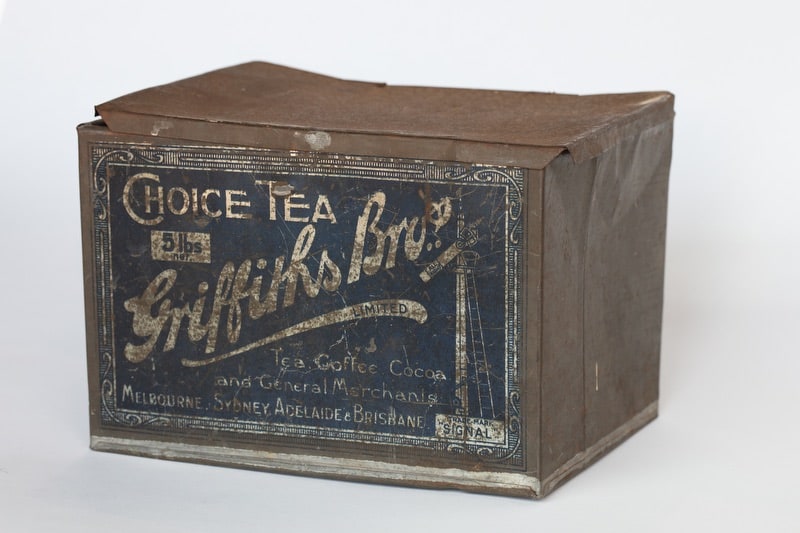
A ‘humble’ tea tin (Griffiths Bros Choice Tea Tin - Karijini Visitors Centre)
Tucked beneath a pile of old flour and sugar bags at the Karijini Visitors Centre is a tin of Griffiths Bros Choice Tea. What may look like a humble tea tin has an incredible history. For Aboriginal workers on the cattle stations and mustering camps of the Pilbara, wages were rarely paid in money. Instead, workers received rations like tea, flour, sugar and tobacco. The tin pictured below represents a system in which people’s labour was compensated with the bare minimum, where everyday objects carried an enormous amount of economic value.
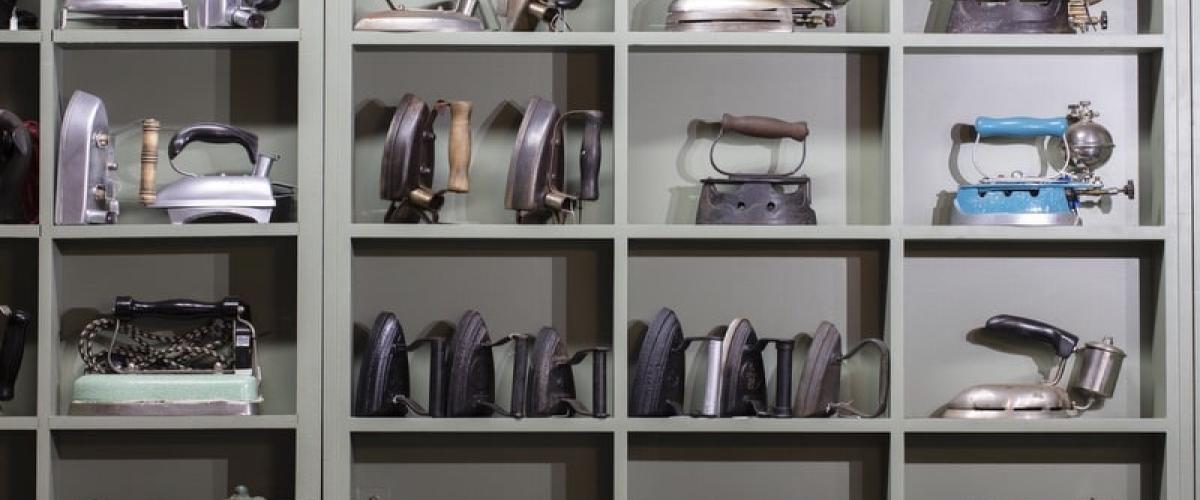
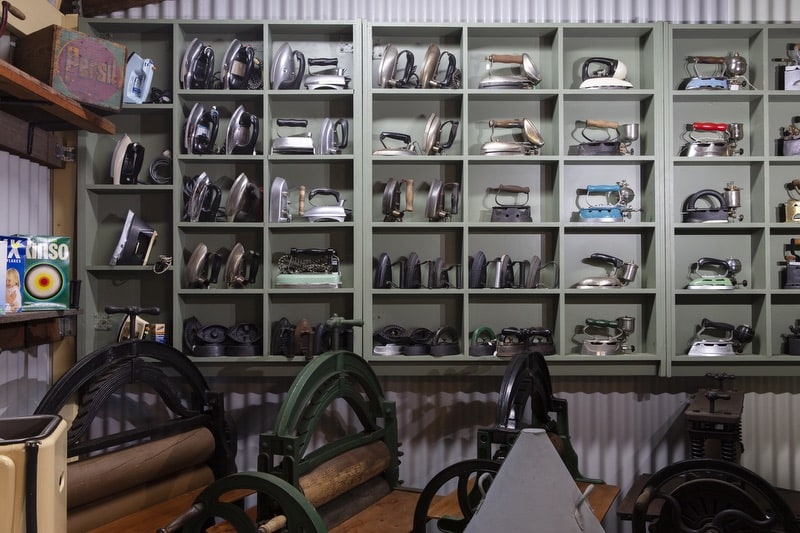
Flat iron collection (Dardanup Heritage Park)
Before the electric iron, there was the flat iron. Solid metal, heavy and heated on a stove, the flat iron was used until it cooled down enough to be swapped for another hot one, and repeated until every last shirt was done. The flat iron collection at Dardanup Heritage Park is, on the surface, a beautifully presented row of shiny irons. The volunteers here take immense pride in their work, with the display perfectly lined like a shop display. As your eyes roam the display, a whole picture starts to form. The stove that had to stay burning, the hours ticking by, the piles of washing waiting to be ironed. Some of the irons even have little compartments for hot coals built right in, a small but brilliant innovation for keeping them warm for longer!
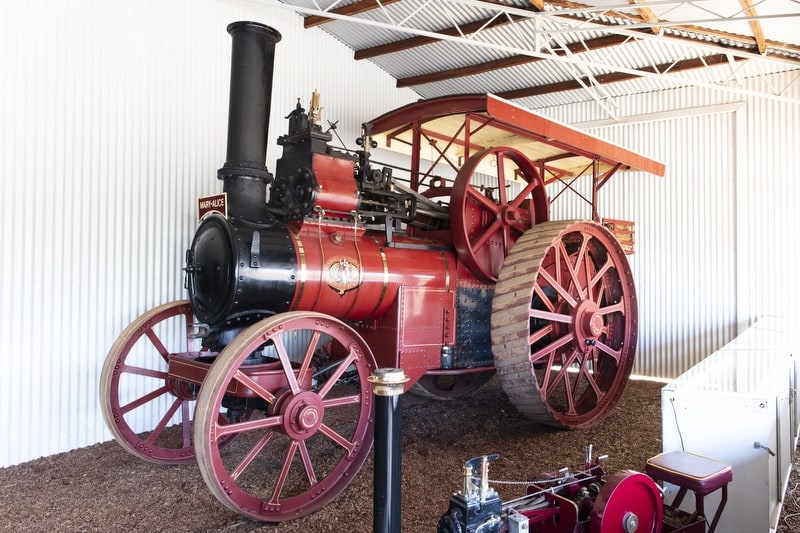
1903 Marshall Traction Engine (Dardanup Heritage Park)
If the flat irons tell the story of domestic labour, the 1903 Marshall Traction Engine tells the story of what happened when the machines arrived to shake everything up. Built at the Britannia Iron Works in Gainsborough, England, this magnificent beast was the very first piece of machinery that the late Gary Brookes (founder of the heritage park) collected and restored. Traction engines like this one transformed WA’s farms and industries in the late 19th and early 20th centuries, doing the find of heavy work that had previously taken enormous teams of people and animals many gruelling days to complete. The best bit? This one still works!
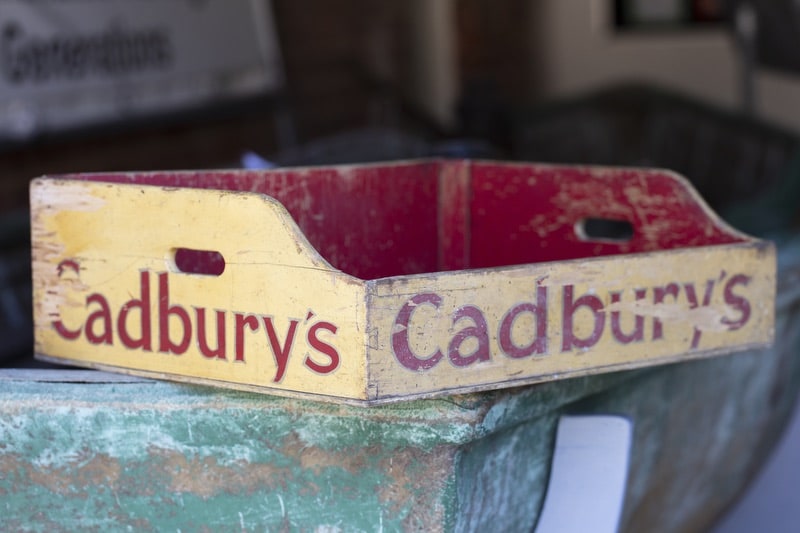
Cadbury tray (Mandurah Museum)
Let us introduce you to Silvina Lanyon. In the early 1900’s Silvina built an empire from scratch. It started with rooms and dining in her Goldfields home. While her husband was away at war, she ran a confectionery and fruit stall. When he returned, suffering from shell shock, he later died, and Silvina moved to Midland to open another stall. When her house burned down, she used the insurance payout to buy a mobile projector and van and started showing films to country towns across the Peel region. By 1923 she had a moving pictures show in Pinjarra. The next year, Open Air Pictures in Mandurah. By 1928, her first proper theatre, then a second, then a third. This wooden Cadbury tray was curved to fit around her waist and was used to sell sweets and drinks to the crowds.
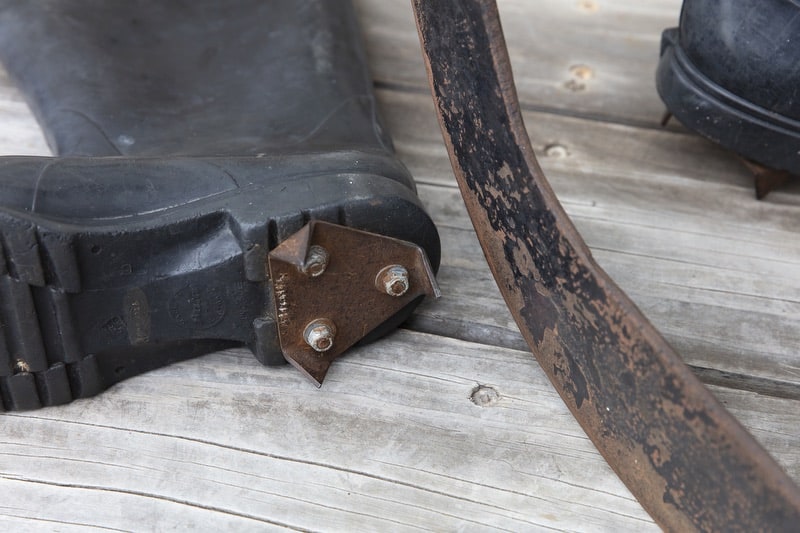
Flensing knife and boots (Albany’s Historic Whaling Station)
There is no job in WAnderland’s collections quite like the work of the flenser. At Albany’s Historic Whaling Station, which operated from 1952 to 1978, you’ll find a pair of rubber boots fitted with metal cleats and a very serious looking long bladed flensing knife. These are the tools of the men who processed the whales once the chasers brought them in from the sea. The flenser would walk directly up over the body of the whale and cut it. Standing on the well-worn flensing deck today, the peaceful scenes make it hard to imagine. The contrast is exactly what makes this place so compelling, and the station’s large photo collection brings the workers to life with faces, names, stories and more.
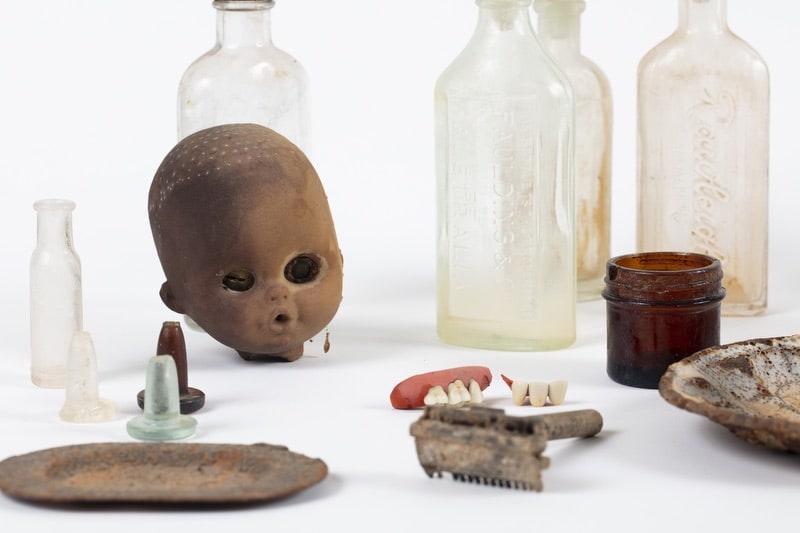
Objects unearthed around Forrest Airport (Forrest Museum)
Not all working histories are grand. Some of them are quiet, domestic, and found in the ground years later by people who happened to look down. The tiny settlement of Forrest sits deep in the Nullarbor and once supported the aviation staff who kept a remote airfield running. Over time, locals started turning up the everyday objects of that working life; tools, bottles, containers, personal belongings buried around the airfield and nearby buildings. Rather than leaving them, residents collected the objects and put them in the Forrest Museum. Together, they form a kind of accidental archaeology. Not curated, but a genuine trace of ordinary people doing ordinary jobs, in an extraordinary place.
WAnderland’s collections not only tell you what people owned, but what people did. The trades they knew, the skills they carried, the long hours, and the work they gave. It’s the history that sits alongside the famous stories, hiding in local museums and centres. Use our itinerary builder to plan your own journey through WA’s working history and see what you discover when you look a little closer.